

Independent research on markets, rates and the AI buildout.
A chart every weekday. Two letters a week. The data shown, every source cited.
We use your address only to send The Signal. Unsubscribe any time. Privacy
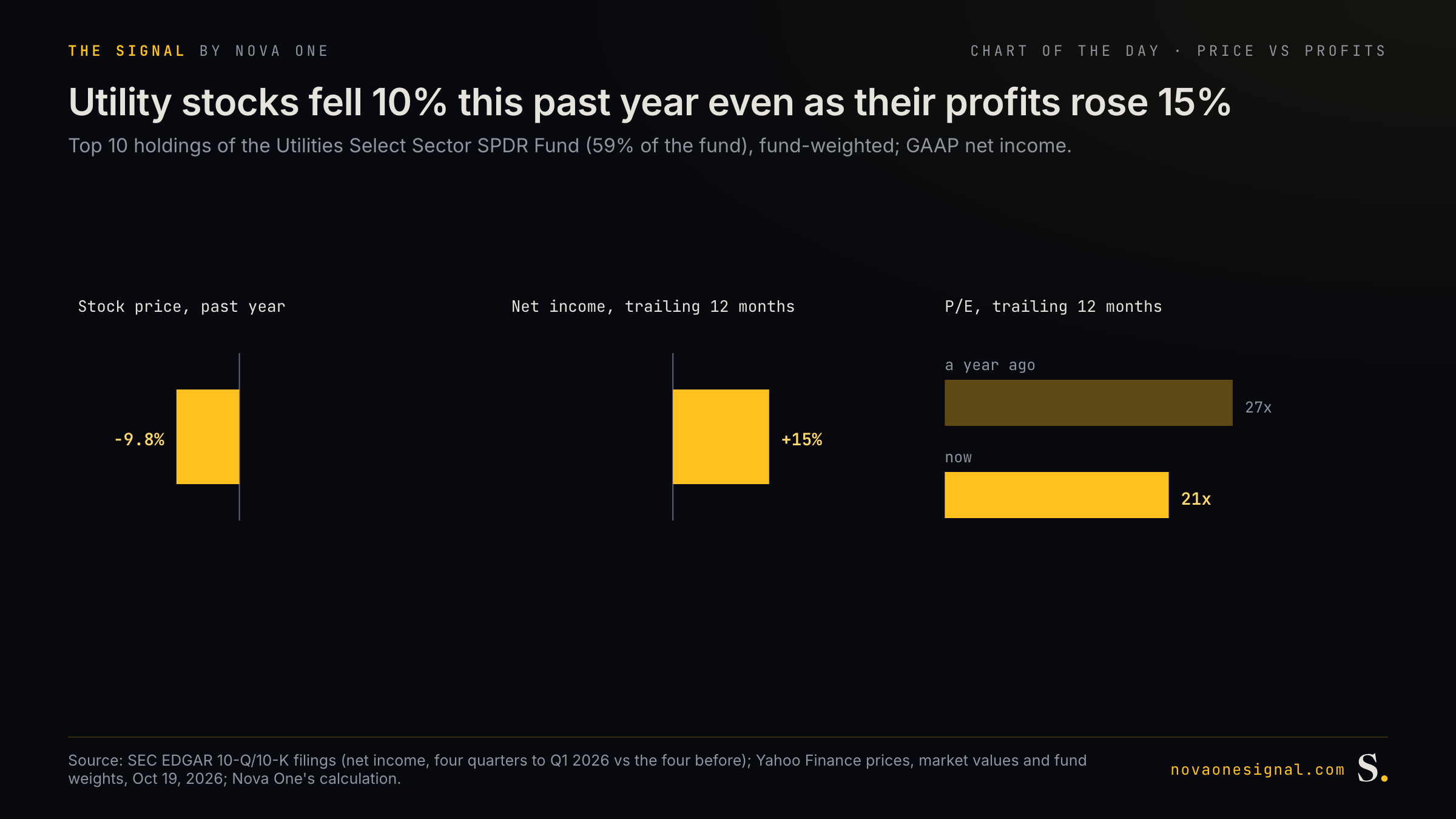
Utility stocks fell 10% this past year even as their profits rose 15%
In the year power became the scarcest input in the AI buildout, investors paid less for the companies that sell it. The utilities fund's top holdings fell 9.8% while their net income rose 15%, so the trailing P/E fell from 27x to 21x. The 10-year Treasury yield rising from about 4.0% to 5.1% weighed more than demand: the market is still pricing utilities as rate-sensitive income stocks, not as AI winners.
Three panels: the stock price change over the past year, the change in net income over the trailing 12 months, and the price-to-earnings ratio a year ago and now. The utilities are measured through the ten largest holdings of the sector fund, weighted as in the fund.
It separates the AI power story from the stocks that are supposed to express it. If rates ease, the gap between rising profits and falling multiples is where the move would come from.
The common view: the AI power shortage makes utilities a winner.
The Signal deskTop 10 holdings of the Utilities Select Sector SPDR Fund (59% of the fund), fund-weighted: price down 9.8% over the past year; GAAP net income up 15% (four quarters to Q1 2026 vs the four before); trailing P/E from 27x to 21x. NextEra Energy supplied 57% of the profit increase.
Demand is showing up in the earnings, and the market is not paying for it. Until rates turn, the shortage helps the income statement more than the stock.
From the letters
The Week Ahead: One Company at a Time
This week turns on a few big earnings reports and a French credit rating, and it lands in a market already punishing single companies at a record pace.
- Week in ReviewWho Pays for ItOctober 24, 2026
- The TakeThe Bottleneck MovedOctober 21, 2026
- The TakeScarce Power, Capped PriceOctober 19, 2026
Recent charts
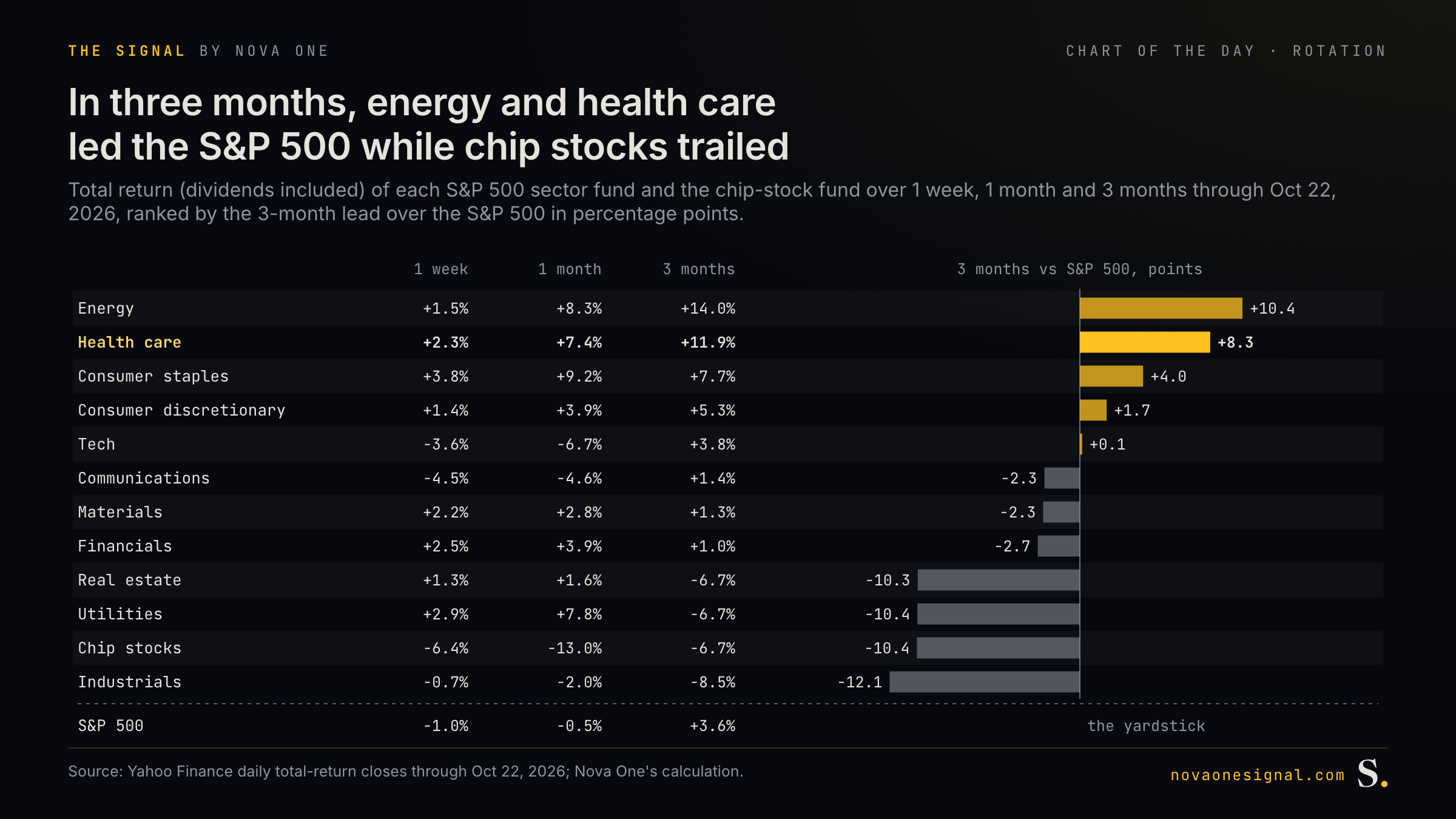
In three months, energy and health care led the S&P 500 while chip stocks trailed
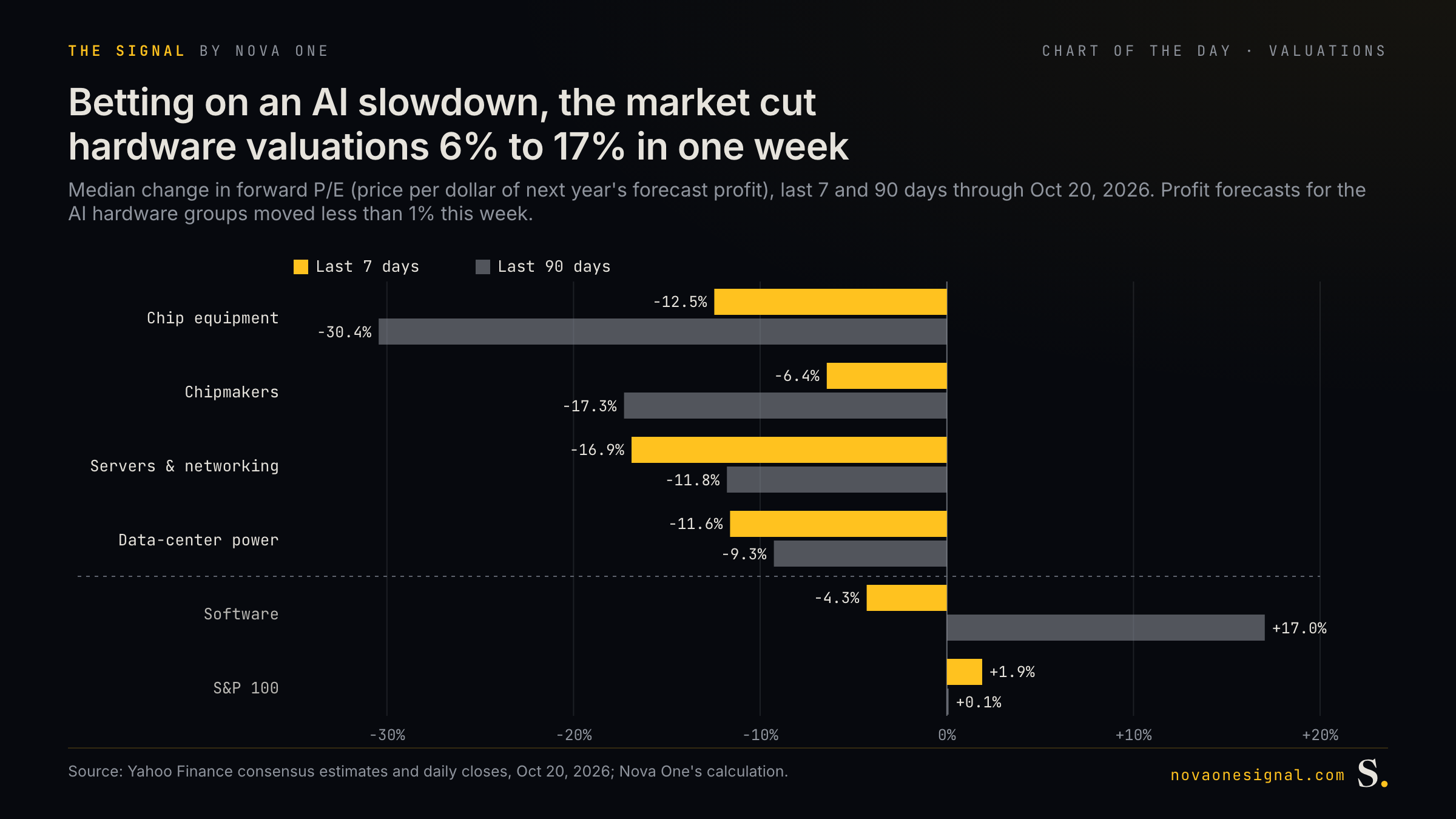
Betting on an AI slowdown, the market cut hardware valuations 6% to 17% in one week
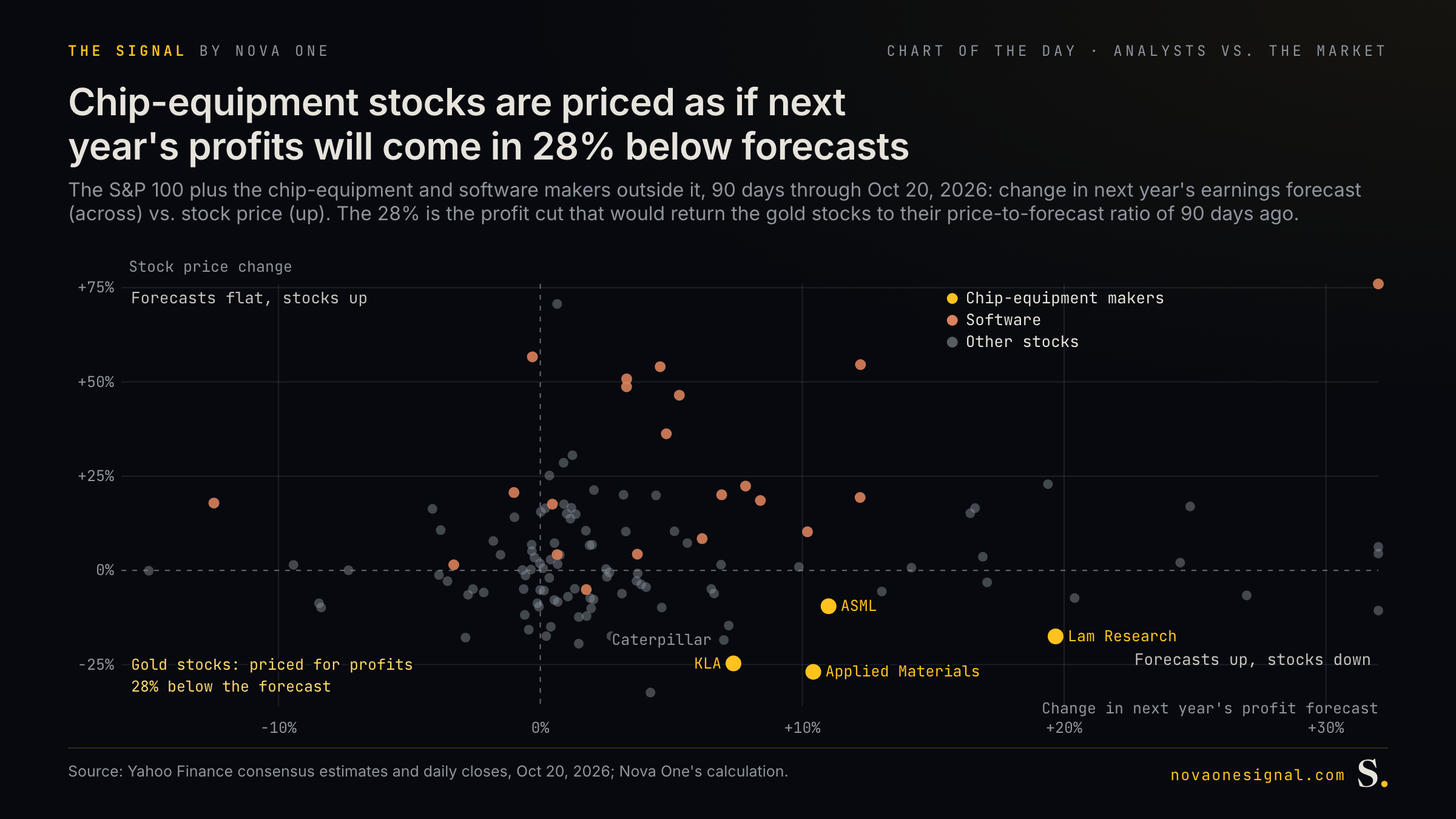
Chip-equipment stocks are priced as if next year's profits will come in 28% below forecasts
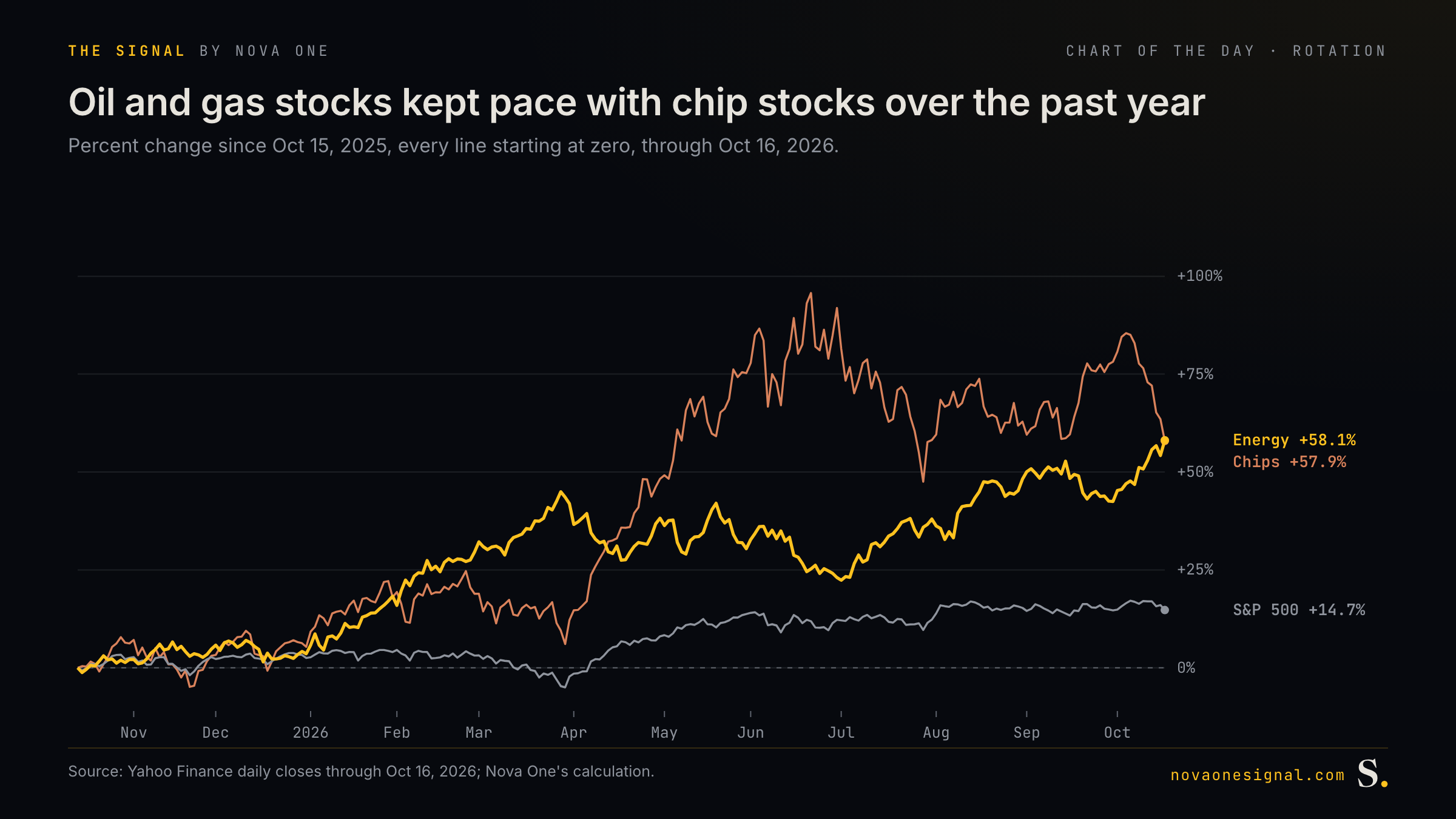
Oil and gas stocks kept pace with chip stocks over the past year
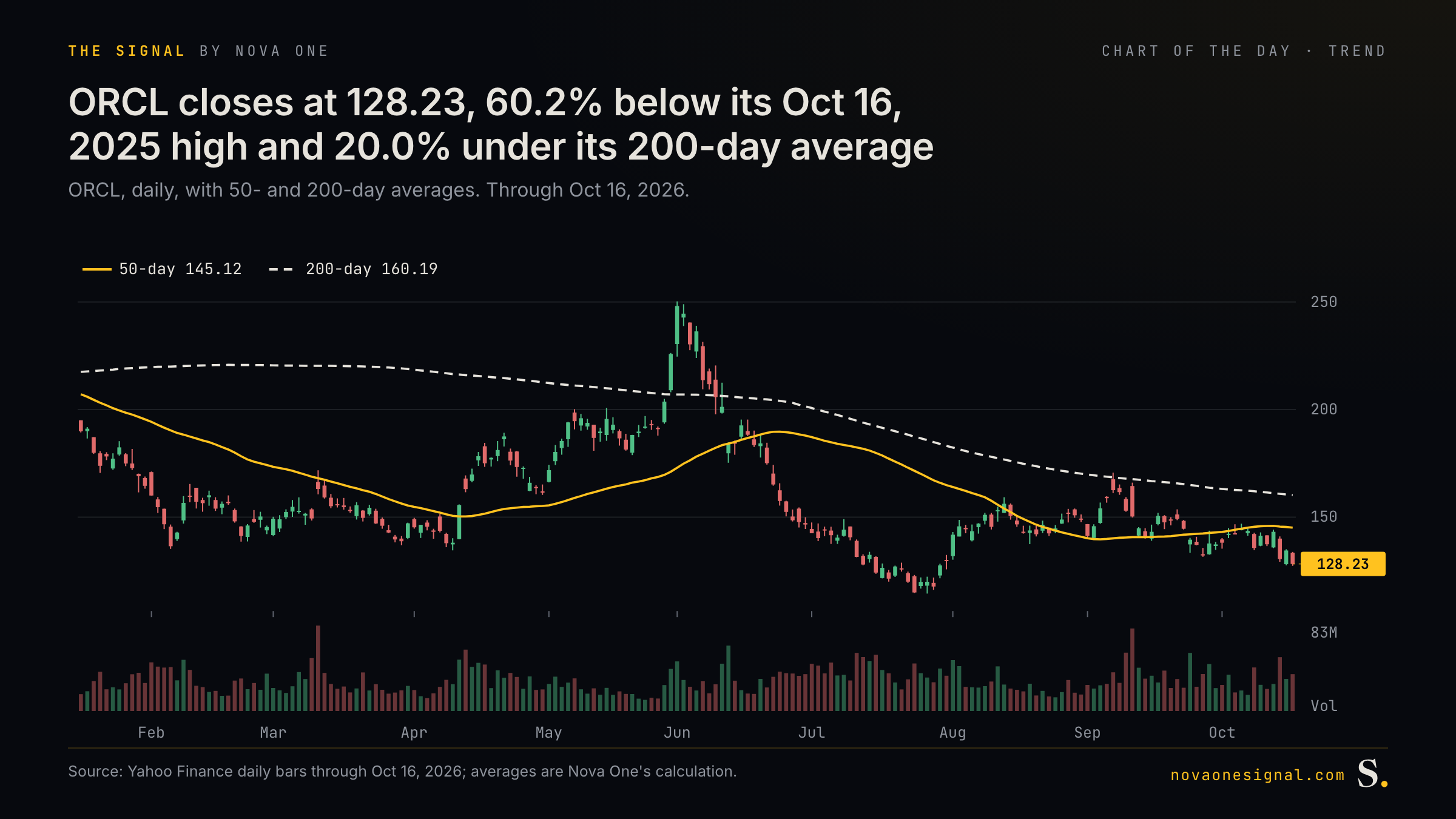
ORCL closes at 128.23, 60.2% below its Oct 16, 2025 high and 20.0% under its 200-day average
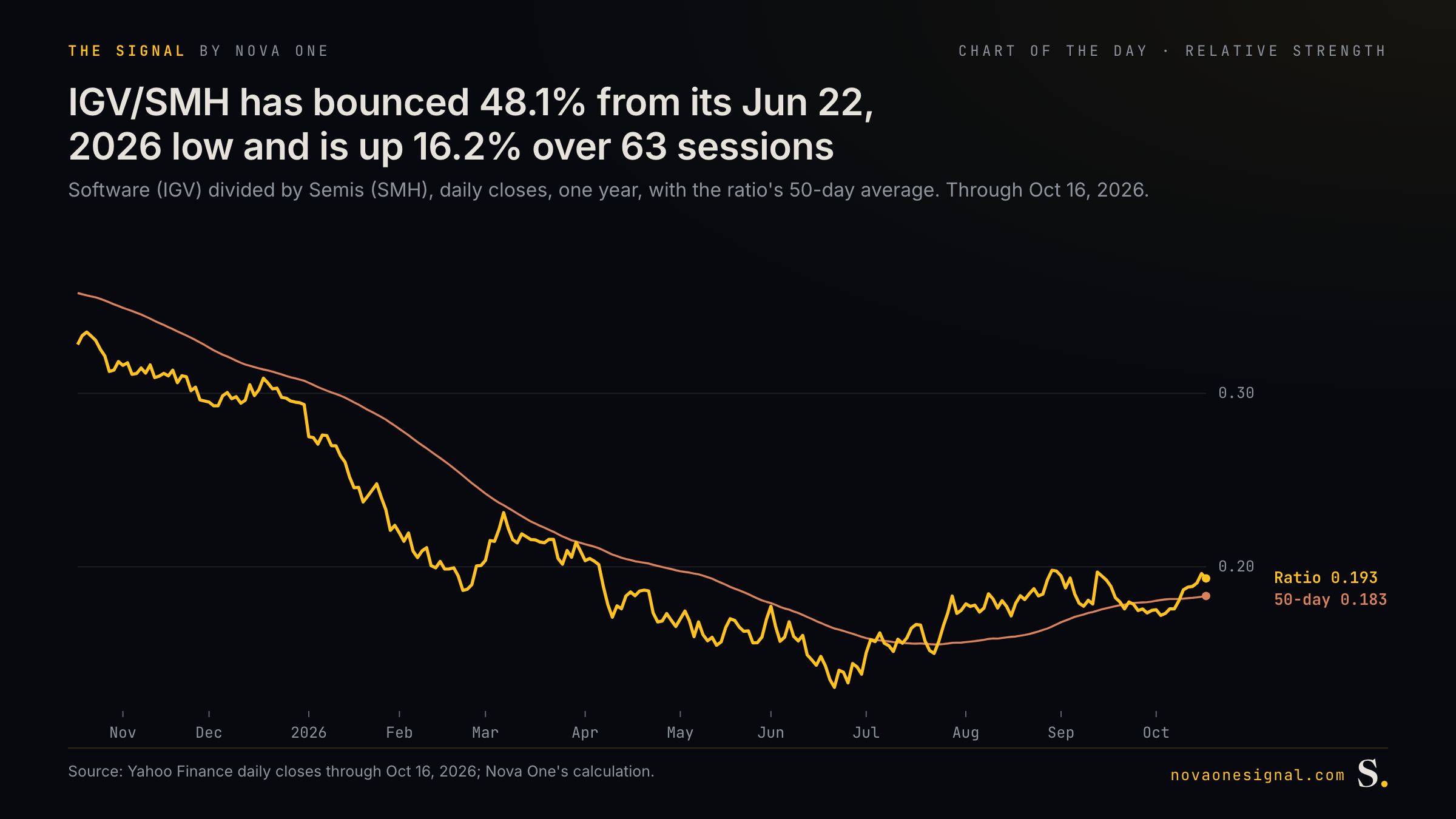
IGV/SMH has bounced 48.1% from its Jun 22, 2026 low and is up 16.2% over 63 sessions
Rates and liquidity
Treasury yields, the curve, real rates and the money behind the tape.
7 chartsThe AI buildout
Chips, software, power and the financing of the largest capex cycle in decades.
1 chartMarket regime
Leadership, breadth, rotation and the cross-asset read on what kind of market this is.
What we publish
Letters on the macro tape, market regimes, geopolitics and the theses we hold, with the data shown and every source cited. Published by Nova One Capital, from the research behind Nova One Convergence Partners, which puts its own capital behind the work.
- Chart of the Day
- WeekdaysOne chart that tests what the market is saying, with the consensus, the data and our read side by side.
- Mid-Week Check-In
- WednesdaysThe tape between letters: the data, the prints and the moves worth a second look.
- Week in Review
- SaturdaysWhat the week changed in markets, and what it did not: the tape, the rates picture, and where our theses stand.
- Deep Dives
- When readyLong-form research on one idea at a time, each with a downloadable white paper.
- Desk Notes
- WeeklyInside the AI research desk behind The Signal: how every claim is tested and every chart is built.